

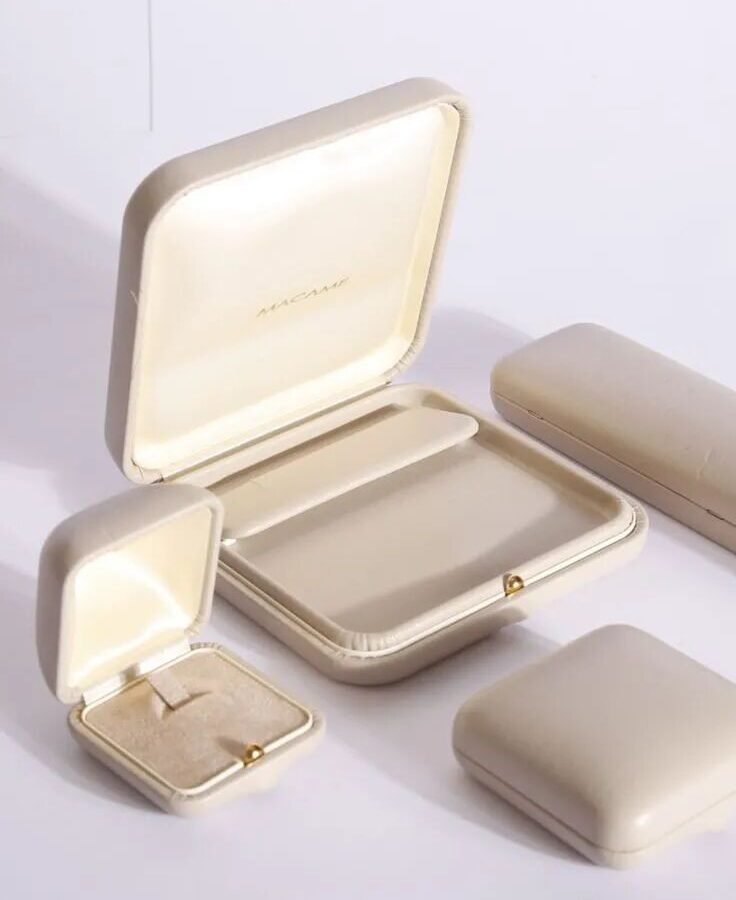
Custom jewelry packaging is the branded box, pouch or insert a brand uses to protect a piece and shape how a customer experiences it. The right format does two jobs at once: it keeps the product safe in transit, and it turns the unboxing into a moment customers connect with your brand. Jewelry is an extension of personal style, so the package is one of the first ways a buyer forms an opinion of what is inside.
This guide compares the four formats jewelry brands order most — two-piece set boxes, magnetic-closure rigid boxes, pillow boxes and jewelry pouches — and the five things to weigh before you commit. If you already know your direction, browse the full range of custom jewelry boxes and request a sample.
Five things to weigh before you choose
Every format below is a trade-off between presentation, protection and cost. Decide where you sit on these five points first, and the right box usually picks itself.
- Material — paper/cardboard, leatherette-wrapped board, velvet or microfiber flocking, PU leather, silk or wood. Material sets the perceived value and the price.
- Structure — rigid (board ~1,000-1,500 gsm) for protection and a premium feel, or foldable/soft for low weight and low shipping cost.
- MOQ — minimum order quantity. Rigid custom boxes typically start around 300-500 pcs per design; some stock items run from 100 pcs. Pouches and folding cartons usually carry the lowest minimums.
- Logo — hot foil stamping, debossing, silk-screen or printed wraps. Place the logo just above the geometric centre of the lid so it reads as optically centred.
- Budget — pouches and pillow boxes are the most cost-effective; magnetic rigid boxes sit at the top. Match the unit cost to your retail price so packaging stays a sensible share of margin.
1. Two-piece set boxes
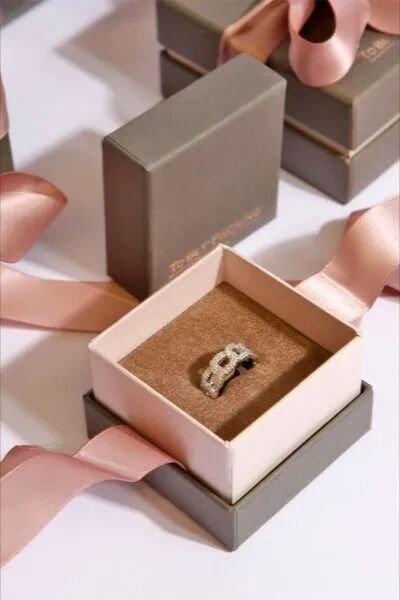
A two-piece set box is a separate rigid lid and base — the classic “lift-off” gift box. It is common in custom jewelry packaging because it is both practical and beautiful: the rigid walls protect the piece, while the clean lid-off reveal feels like opening a luxury gift.
For brands that want a premium hand-feel without an over-engineered mechanism, a rigid two-piece set box is a reliable win — leatherette-wrapped board with a velvet or foam insert holds shape and reads as high-end on a counter.
- Best for: rings, pendants and earrings sold as a gift.
- Strength: strong protection plus a clean, premium unboxing.
- Watch-outs: rigid board adds weight and freight cost versus folding options.
2. Magnetic-closure rigid boxes
A magnetic rigid box hides two magnets in the lid that snap shut with a satisfying click. That closure is the whole point — it gives an unboxing customers remember, and the rigid shell is sturdy enough that buyers rarely throw it away. That reuse makes it a quietly sustainable choice, because the box lives on as storage for jewelry, watches or small accessories.
It is the most premium of the four formats and sits at the top of the budget. If you want that closure in a slimmer profile, a rigid flip-top box with a ribbon pull gives a similar reveal at a lower unit cost, while a PU leather magnetic box suits watches and larger pieces.
- Best for: fine jewelry, watches and hero pieces where the unboxing matters.
- Strength: memorable closure, durable, kept and reused by customers.
- Watch-outs: highest unit cost and the highest MOQ of the four.
3. Pillow boxes
If your jewelry is small, a pillow box is a smart custom packaging choice. The curved “pillow” shape is distinctive enough that customers remember both the package and the product, it opens easily, and it still protects what is inside. It is also one of the most cost-effective formats — a high-end look without rigid-box pricing.
Cardboard and kraft versions, like our paper jewelry boxes, keep costs down while staying recyclable; a soft-pillow velvet box lifts the same idea upmarket with the right artwork.
- Best for: studs, thin chains and lightweight pieces.
- Strength: cost-effective, distinctive, low shipping weight.
- Watch-outs: less protective than a rigid box for heavier pieces.
4. Jewelry pouches
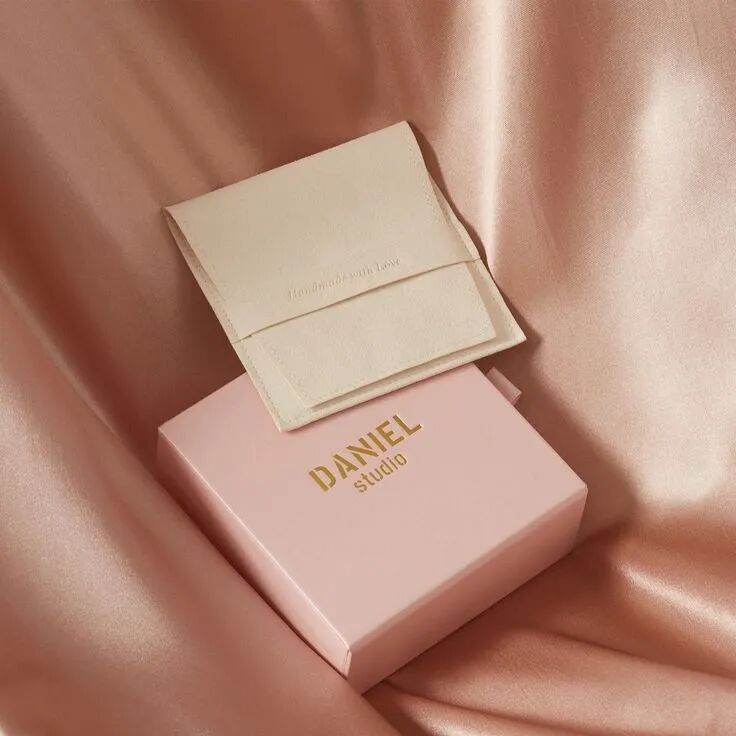
For a more minimalist solution that keeps the charm of custom packaging, a jewelry pouch works well. Pouches come in many materials, so they are an easy route to a more eco-friendly package, and they cost less than boxes while still feeling tailored to your brand.
A drawstring or snap velvet pouch suits everyday lines, while an embroidered silk pouch adds a premium, giftable finish. The trade-off is protection: a pouch alone offers little structure, so heavier pieces often ship inside a box or an extra protective layer.
- Best for: minimalist brands, travel sets and eco-conscious lines.
- Strength: affordable, lightweight, broad material choice.
- Watch-outs: low protection; often needs a box for safe transit.
Quick comparison
| Format | Protection | Unit cost | Typical MOQ | Best for |
|---|---|---|---|---|
| Two-piece set box | High | Mid-high | 300-500 pcs | Gift-ready rings & pendants |
| Magnetic rigid box | High | High | 500 pcs | Fine jewelry & hero pieces |
| Pillow box | Medium | Low | From 300 pcs | Small, lightweight pieces |
| Jewelry pouch | Low | Low | From 100-300 pcs | Minimalist & eco lines |
How to brief your packaging supplier
Once you have a format, a tight brief gets you an accurate quote fast. Share these five points up front:
- Piece & insert — what goes inside (ring, necklace, set) and the slot or pillow it needs.
- Material & colour — wrap material plus a Pantone reference for brand colour.
- Logo method — hot stamping, debossing or print, with vector artwork.
- Quantity — your target MOQ; most custom boxes run 300-500 pcs per design, with samples in 7-10 days and bulk in about 15-25 days.
- Budget — a target unit cost so the supplier can suggest the closest format. For lower price points, look at value-focused jewelry boxes.
Balancing presentation against protection, weight and cost is exactly why exploring your options matters before you commit. Pick the format that fits your product and your margin, then refine the material and logo from there.
FAQs
What is the MOQ for custom jewelry packaging?
Most custom jewelry boxes start at 300-500 pcs per design. Some stock items run from 100 pcs, and pouches usually carry the lowest minimums.
Which custom jewelry packaging is most cost-effective?
Pouches and pillow boxes are the most affordable formats. Two-piece set boxes sit in the middle, and magnetic-closure rigid boxes are the most premium.
How is a logo added to a jewelry box?
The most common methods are hot foil stamping, blind debossing, silk-screen printing and full-colour printed wraps. Send vector artwork for the cleanest result.
How long does custom jewelry packaging take to produce?
Samples typically ship in 7-10 days and bulk production runs about 15-25 days after artwork and sample approval.
Can I get a sample before ordering?
Yes. Request a free sample to check the material, colour match and logo finish before committing to a bulk run.