

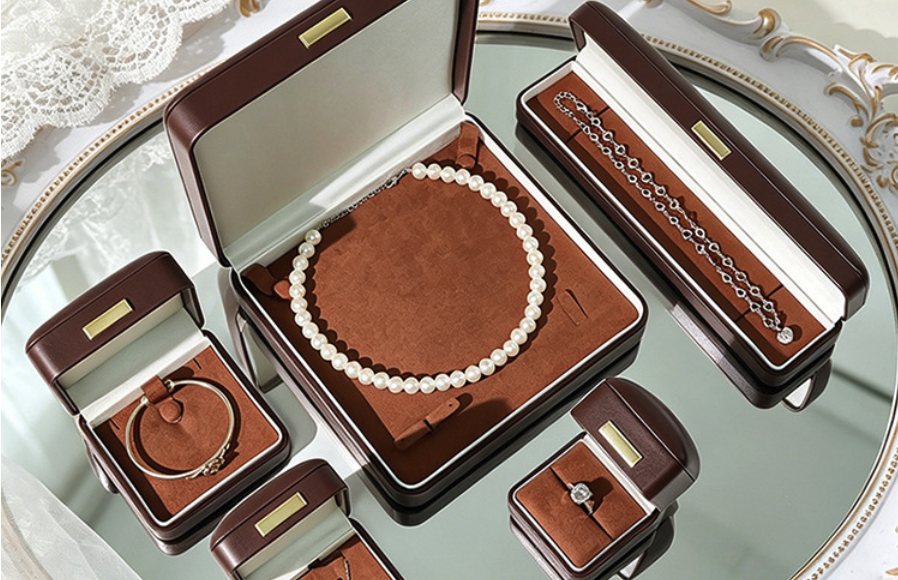
Velvet vs leatherette jewelry boxes comes down to one trade-off: velvet wins on soft, luxurious feel and perceived value, while leatherette (PU leather) wins on durability, crisp logo finishing and a hard-wearing, wipe-clean surface. Neither is “better” outright — the right pick depends on your brand position, your price point and how the box is used. This guide compares the two across the five things that actually decide it: feel, logo, durability, price and use case.
Both sit inside the wider family of custom jewelry packaging types; here we put them head to head.
Quick verdict
Here is how velvet vs leatherette jewelry boxes compare at a glance.
| Factor | Velvet | Leatherette (PU) |
|---|---|---|
| Feel | Soft, plush, premium touch | Smooth, firm, refined |
| Logo | Best with foil or a metal plate | Crisp foil, debossing, print |
| Durability | Attracts dust; pile can crush | Scuff-resistant, wipes clean |
| Price | Low to mid (flocked velvet) | Low to mid |
| Best for | Fine jewelry, gifting, display | Travel, retail, everyday, men’s |
Feel and look
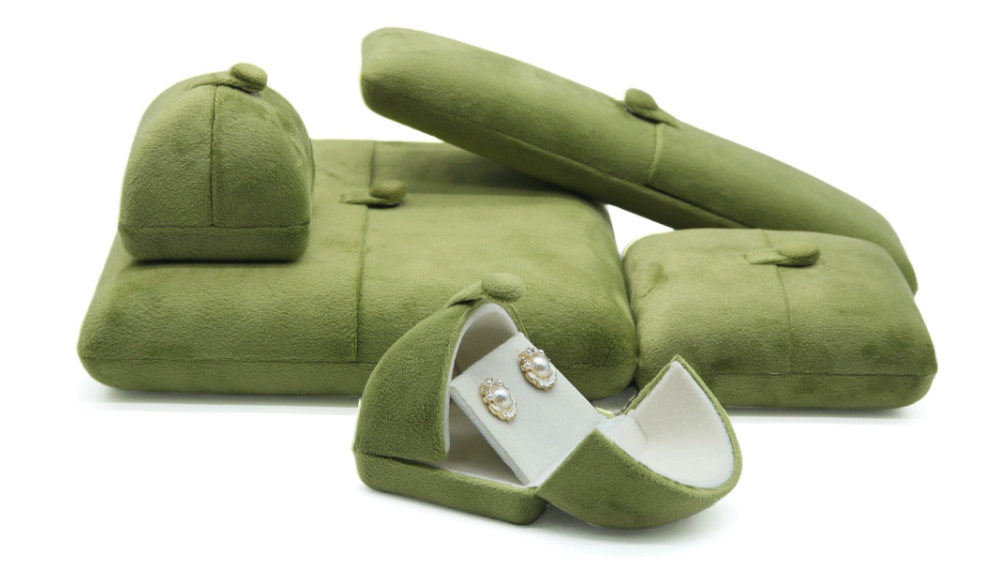
Velvet — whether the whole box is velvet or a rigid body is covered in it — gives a soft look and touch that reads as refined and noble. That plush hand-feel is exactly why mid-to-high-end brands reach for it: it makes the piece inside feel more valuable. Genuine silk velvet is costly to produce, but flocked velvet delivers most of the look affordably, so a velvet jewelry box is an easy way to signal luxury.
Leatherette is not fully leather — a rigid blank is wrapped in PU. It looks polished and high-end and feels smooth and firm rather than soft. Its flexibility is a quiet advantage: it bends to unusual shapes, which is why jewelry rolls and pouches are often made from it. Shoppers increasingly prefer good leatherette boxes and PU leather over genuine leather for the lower cost and lighter environmental footprint.
Logo and branding
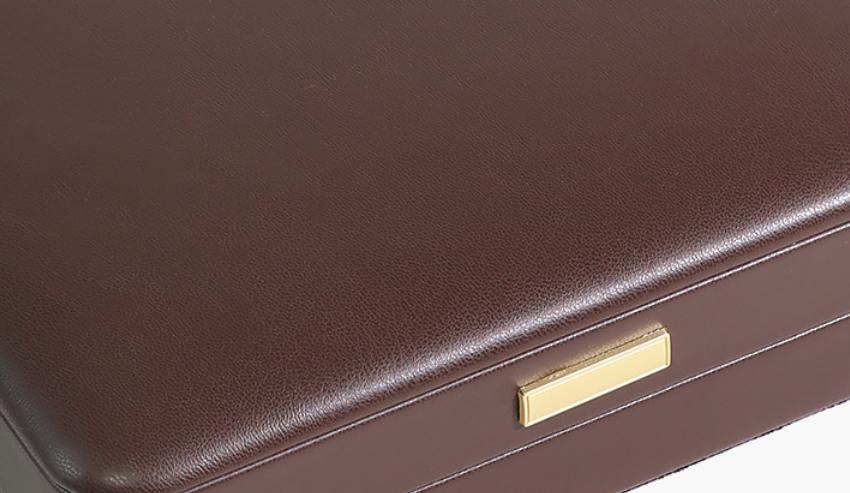
This is where the materials really split. Leatherette takes a logo crisply: hot foil, debossing and printing all land cleanly on its smooth, firm surface. Velvet’s pile resists a recessed deboss, so the best results come from foil stamping, a printed lid or an applied metal plate. If branding fidelity is your priority, match the method to the material — see the full breakdown in our guide to logo methods.
Durability
Leatherette is the tougher of the two. The PU surface shrugs off scuffs and wipes clean with a cloth, which is why it holds up in travel cases and high-touch retail. Velvet looks beautiful but is higher-maintenance: the pile attracts dust and lint, can crush or mat under pressure, and is harder to clean. For pieces that are handled often or carried, leatherette ages better; for pieces that sit on a shelf or in a drawer, velvet stays pristine.
Price
Flocked velvet and leatherette sit in a similar low-to-mid band, so price rarely decides between them alone — the finishing and structure matter more. If budget is the hard constraint, a paper or card box with a soft fabric lining is the most cost-effective route, and it is rising fast with live-commerce and fast-fashion jewelry for its value and eco appeal. For ways to keep any small run affordable, see our guide to cutting low-MOQ cost, or browse ready value jewelry boxes.
Best use cases
- Choose velvet for fine jewelry, engagement and proposal pieces, gift sets, and counter display — anywhere the unboxing and perceived value carry the sale.
- Choose leatherette for travel cases and rolls, everyday and men’s lines, retail with heavy handling, and brands that want a crisp, durable logo.
- Choose paper for fast-fashion, high-volume e-commerce and eco-led lines where value and weight matter most.
Velvet, leatherette and paper are the three materials you will meet most often in jewelry packaging. In the end, velvet vs leatherette jewelry boxes is a question of brand position: decide where you sit on luxury versus durability, then refine the colour, lining and logo. Not sure? Order a custom jewelry box sample in each material and judge the hand-feel yourself before a bulk run.
FAQs
Are velvet or leatherette jewelry boxes more durable?
Leatherette is more durable. Its PU surface resists scuffs and wipes clean, while velvet attracts dust and its pile can crush over time. For travel and high-touch retail, leatherette holds up better.
Which looks more luxurious, velvet or leatherette?
Velvet generally reads as more luxurious thanks to its soft pile and noble associations, which is why mid-to-high-end brands favour it. Leatherette looks polished and premium but firmer and more practical.
Is leatherette the same as real leather?
No. Leatherette is PU (faux leather) wrapped over a rigid blank. Many brands now prefer it over genuine leather for its lower cost, consistency and lighter environmental footprint.
Which takes a logo better?
Leatherette. Its smooth, firm surface takes foil, debossing and printing crisply. Velvet’s pile resists debossing, so foil stamping or an applied metal plate works best on it.
Which is cheaper?
Flocked velvet and leatherette are similarly priced in the low-to-mid range. If cost is the priority, a paper or card box with a fabric lining is the most affordable option.