

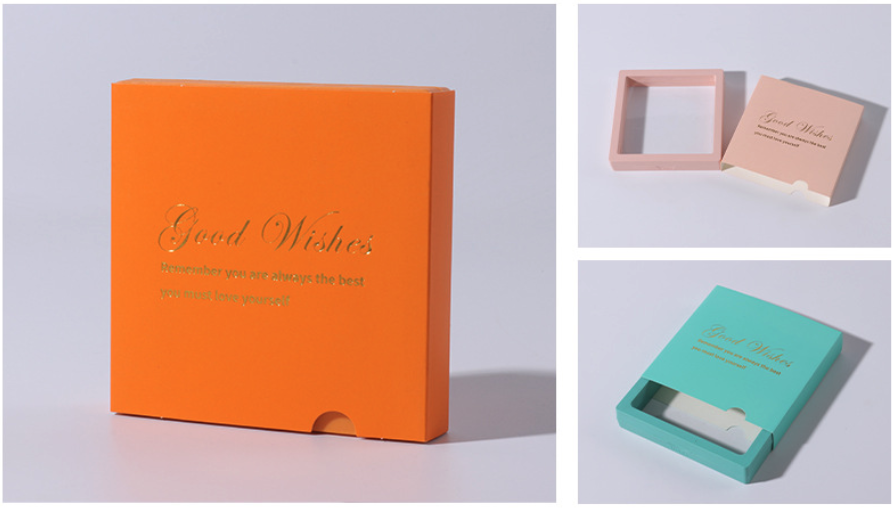
Low MOQ jewelry boxes do not have to be expensive — small batches feel costly mainly when you pick the wrong material, the wrong size or too much decoration, not because small runs are inherently dear. If you are a startup brand or a small e-commerce seller ordering custom gift boxes, three practical tactics will pull your small-batch packaging cost down while keeping the box feeling premium.
Low MOQ Jewelry Boxes: Buyer Summary
- Practical MOQ: most custom jewelry boxes start around 300-500 pcs per design, while simple paper or pouch programs may be lower.
- Best low-cost structure: coated or kraft paper jewelry boxes with a right-sized insert and logo-only foil or digital print.
- Best logo method for small runs: digital printing for color artwork, or foil stamping for a premium logo without full-box decoration cost.
- Sample and mockup: request a free mockup first, then approve a pre-production sample before bulk production.
- Lead time: plan 7-12 days for samples and about 15-25 days for standard bulk production after sample approval.
For current styles, compare our paper jewelry boxes, browse all custom jewelry boxes, or use the wholesale jewelry boxes page for bulk order planning. Ready to price a small batch? Request a quote.
This guide shares all three, with real numbers. New to box formats first? See our guide to custom jewelry packaging types, our guide to logo methods, and our wholesale jewelry boxes page, then use the cost tactics below.
1. Choose the right material, not the most expensive
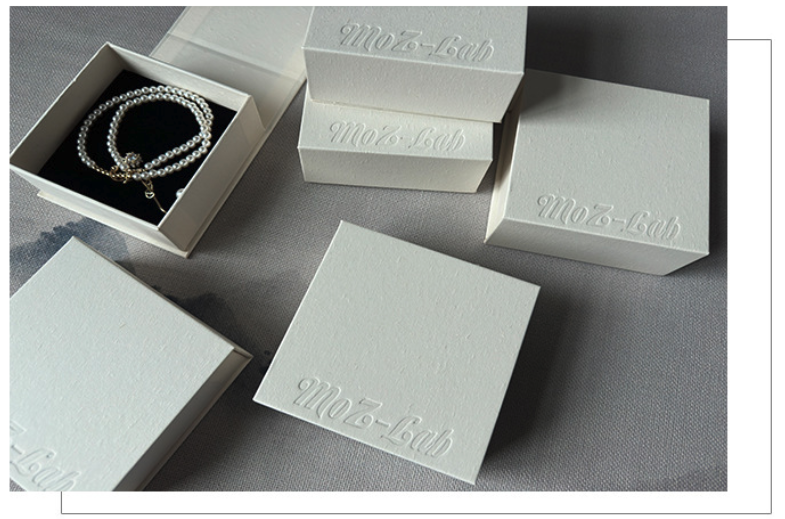
Many sellers assume a heavier, thicker box reads as more premium, and over-spec heavy specialty paper or complex finishing — which only adds cost. Different products suit different materials, so match the stock to the item and protect both feel and margin:
- Light, small items (jewelry, beauty minis, tea): 250–300 gsm white card with lamination. It looks clean and tidy and runs about 25% cheaper than specialty paper. To lift it, foil just the logo area rather than the whole box.
- Regular products (snacks, supplements, lifestyle goods): 350 gsm art (coated) paper or a light-texture specialty stock with a simple ribbon or sticker. It balances feel and cost, and is the mainstream choice for small e-commerce.
- Premium products (skincare, gift sets): you do not need specialty stock across the whole box. Use a 350 gsm art-paper main box with a specialty-paper accent panel — it signals premium while saving about 20% versus an all-specialty box.
Kraft and coated paper jewelry boxes are the most cost-effective base, and partial (logo-only) foil keeps the premium cue without full-box cost — see how foil compares in our logo methods guide.
2. Fit the box to the product — kill wasted space
Sellers often size up “for presence”, leaving too much empty space inside. That wastes board and forces extra cushioning (sponge, satin), which pushes cost up further.
Do this instead: measure the product’s length × width × height precisely, then add only 0.8–1.5 cm on each dimension for easy placement and light cushioning. For sets, plan the interior zones and use a one-piece card insert (a folded paperboard tray) instead of separate sponge or satin inserts — that cuts both material and assembly cost. A well-planned compartment insert protects the piece without padding you do not need.
3. Focus the decoration — avoid the over-finishing premium
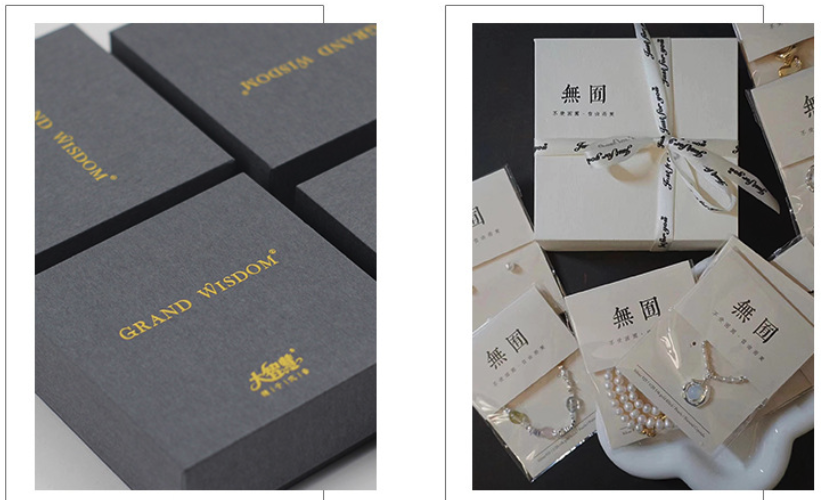
Complex finishing — full-box foil, raised UV, embossing, die-cut shapes — sharply raises small-batch cost. The job of the box is to carry your brand and frame the product, not to stack up processes.
- Limit finishing to 1–2 highlights, e.g. a foil-stamped logo plus a simple line emboss. That reads on-brand and stays affordable.
- Keep print simple: brand logo, name and one core claim (“handmade”, “small-batch custom”), in two colours or fewer.
- Use digital printing, not offset. Digital has no minimum-order plate cost, so small runs print about 30–40% cheaper than offset — ideal for startups testing a design.
Bonus: how you brief the factory
How you order matters as much as what you order:
- Say “small batch” up front and choose a factory built for low minimums and quick turnaround — some accept custom orders from 100 pcs.
- Ask about gang (combined) printing — sharing a print sheet with other small orders spreads the setup cost.
- Avoid peak season. Ordering 2–3 months before major holidays costs more and ships slower; off-season quotes are lower and lead times shorter.
For ready low-cost options to benchmark against, browse our value jewelry boxes, compare paper jewelry boxes, or review the full range of custom jewelry boxes. For bulk pricing, use our wholesale jewelry boxes page or request a quote before a bulk run.
Quick wins at a glance
| Tactic | What to do | Typical saving |
|---|---|---|
| Right material | 250–300 gsm laminated card vs specialty paper | ~25% |
| Accent, not all-over | Art-paper box + specialty accent panel | ~20% |
| Right size | Add only 0.8–1.5 cm; one-piece card insert | Less board + no padding |
| Digital print | Digital instead of offset for small runs | 30–40% |
| Smart ordering | MOQ from 100, gang printing, off-season | Lower quote + faster |
FAQs
Are low MOQ jewelry boxes more expensive per unit?
Per-unit cost is higher than at large volume, but you control most of it. Choosing laminated card over specialty paper, right-sizing the box and using digital printing keep small-batch unit cost reasonable.
What is the cheapest material for small-batch custom boxes?
250–300 gsm white card with lamination is the most cost-effective for light items — about 25% cheaper than specialty paper while still clean and premium-looking.
How much cheaper is digital printing than offset?
For small runs, digital printing is roughly 30–40% cheaper because it has no plate or minimum-order setup cost. Offset only wins at high volume.
What is a realistic MOQ for custom jewelry boxes?
Many factories built for small-batch work accept custom orders from 100 pcs. Standard rigid boxes more often start around 300–500 pcs per design.
How do I cut cost without making the box look cheap?
Spend where it shows: a foil logo and a simple emboss on laminated card, right-sized to the product, reads premium for far less than full-box foil on heavy specialty stock.